Flood Watches, Flood Warnings, and Flood Preparedness

By Joan Whetzel
Rainfall is a necessary ingredient for our every day existence, from plant growth to cleansing the atmosphere, as well as for business and home needs. But when it falls in excessive amounts, dropping far more than han the ground can hold and streams can carry away, the inevitable flooding occurs, which often leads to economic and environmental damages in cities and the farming communities. The best way to prepare for such hazards is to understand flooding, the causes, the risks for flooding in their area of the country,how to prepare for a flood event and where to find information.
What Is Flooding?
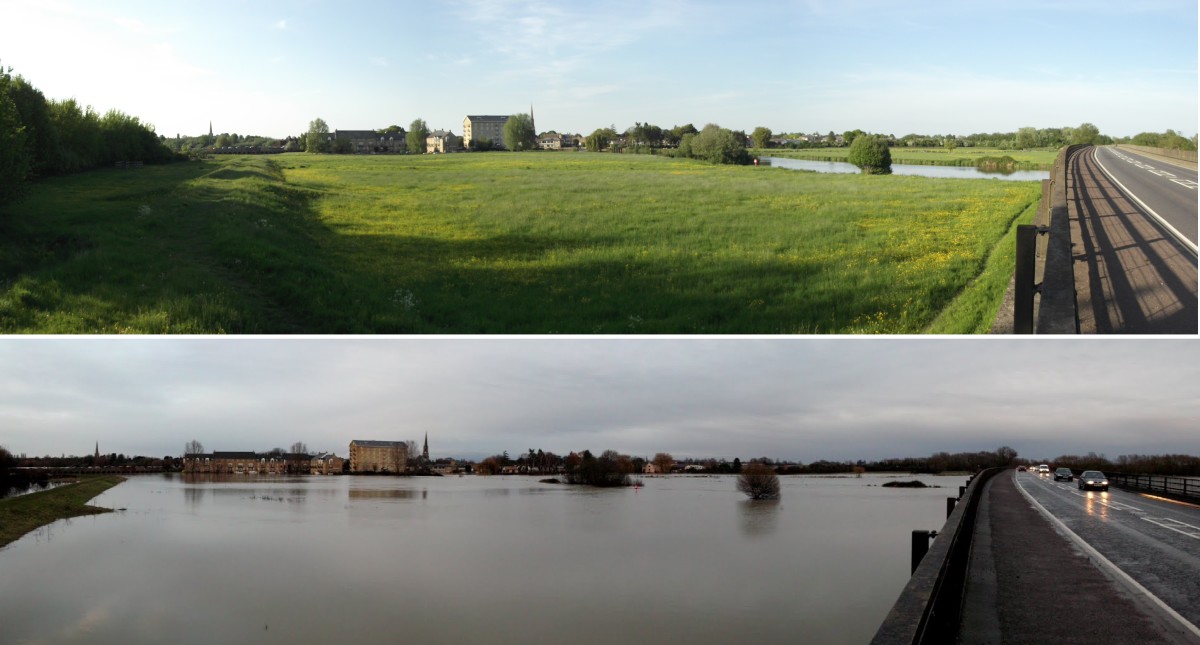
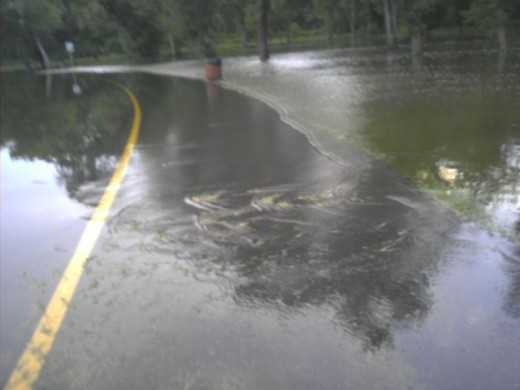
Flooding is defined as a surplus of rain, melting snow, or water from an overflowing river or lake that causes massive amounts of flowing water to cover land that isn't normally covered by water. It becomes a significant flood when the water escapes the boundaries of lakes and rivers to the point that the water jeopardizes land used by people (towns, cities, farming communities).
Negative Effects of Flooding
Flooding leaves many problems in its wake:
- Uprooting or killing trees, with long-term flooding triggering root rot.
- Poor plant growth due to poor soil aeration (the space between the dirt flecks is filled with water instead of air, preventing air from getting to the roots).
- Soil erosion as the floodwaters drain off, taking top layers of soil with it.
- Economic damages due to destruction of roads, bridges, buildings, homes as well as harm to crops and livestock which in turn leads to less food supplies and higher prices.
- Economic stresses caused by the need for repairs to and replacements of storm drainage systems and raw sewage systems.
- Health related issues caused by breaches of raw sewage systems.
- Traffic problems in urban areas due to flooded roads, collapsed bridges, and traffic light malfunctions.
- Flooded out cars littering the roadways, which may leak oil, gas and fluids into the waters. These leaked fluids will either leach into the ground (and the groundwater supply) as flood waters soak into the ground, or get carried out to sea.
- Interrupted natural gas, electricity and water service, resulting in a lack drinking water .
- Deaths from dying when cars and homes are engulfed by rapidly rising flood waters.
- Destructions of wetlands and wildlife habitats by floodwaters and massive deposits of silt or even toxic substances like fertilizers and pesticides, manmade chemicals, and petroleum products.
- Increased exposure to diseases such as dysentery due to flood water interacting with water from flooded sewage systems and flooded sewage treatment plants. This of course, leads to contaminated drinking water.
Watches and Warnings
The first, and most important way to prepare for flooding is to stay aware of the weather. Common senses tells us that: 1) excessive snow in the winter can lead to flooding in the spring as the snow melts, and 2) if it rains a lot up-stream, then people downstream can expect that excess water to come their way, especially if it's raining downstream as well. It's important to keep track of the weather forecasts locally and nationally so that you know what to expect. When it comes to flooding there are four terms worth remembering: flood watch, flood warning, flash flood watch, and flash flood warning.
- Flood Watches and Flash Flood Watches mean that a flash flood or flooding is possible and that people should tune to NOAA Weather radio or to their local radio and TV stations to find out more information. Flash flooding generally occurs very quickly, so there less time to warn people of a flash flood than regular flooding.
- Flood Warnings and Flash Flood Warnings mean that a flash food or flooding is likely to occur and people should prepare to evacuate to higher ground immediately. Warnings are issued for specific areas and may not affect everyone within broadcast range of the news reports.
Causes of Flooding
Causes of flooding include:
- rains from tropical storms and hurricanes.
- any storm surge pushed inland prior to the hurricane or tripical storm making landfall.
- spring thaw, particularly if the snowfall was greater than normal, or if areas downstream (southern states for instance) get heavy rains just as water from the spring thaw is heading their way.
- heavy rains over an extremely short period of time or rains that fall for an extended period of time (several days in a row).
- levees meant to protect against rivers and lakes overflowing their banks, which fail,
- new development can create conditions that produce flooding. As cities worldwide expand with more and more concrete, they eliminate more and more of the open ground that would normally soak up all the normal rainfall. As a result, all the concrete allows all the rainfall to stay "above ground" and flood the cities and become an urban runoff that must flow down the drainage systems into the streams and rivers. It's more water than the streams and rivers can handle, so the overflow their banks.
River Levees
Most rivers are protected by earthen levees, which are man-made by piling earth up along the cleared river banks, to produce wide-based, artificial embankments that are flat on top and taper to a wider base. During heavy rain periods or periods of heavy spring thaws, sandbags can be stacked on top of the flattened embankments to temporarily increase the height of the embankment. The problem is that rivers carry silt and sediment which gets deposited along the riverbeds, thereby raising the bottom of the river, making it more shallow. Planning and maintenance needs to be ongoing so that rivers can periodically be dredged or widened. This allows the rivers to continually carry off large amounts of water so as to prevent future floods. Levees must also be maintained to prevent catastrophic failures.
Sand Bagging
One of the things people can do to help prevent flooding - especially if they live along rivers or in flood prone areas - is sandbagging. Sandbags - 14 inch wide by 24 to 26 inch long woven polypropylene - are filled slightly more than half full with approximately 35 to 40 pounds of sand, silt or clay. Sandbags mold easily against each other without the need for concrete or other cementing material. Sandbags can be placed against doorways and around the base of buildings and houses to keep flood waters out. They are also used for river levees. However, proper training is required before sandbagging river banks is accomplished. Improperly set sandbags can result in levee breaks. The Army Corps of Engineers has recommendations for proper sandbagging of rivers.
What to Do When Homes and Business Flood
Some recommendations for preparing for and protection from flooding:
1. If you live or own a business in a flood prone area, obtain flood insurance and abide by the policy's flood hazards terms.
2. Put together an emergency preparedness kit (similar to one you might put together for hurricane or tornado preparedness)
3. Create a family communications plan including where you might meet up, what to do if you're separated, and a list of people you could call in case of flooding.
4. Elevate home furnaces, water heaters and electrical panels, especially in high flood risk areas.
5. Install check valves into your home drains.
6. Construct barriers to prevent flooding into homes and businesses.
7. Seal basement walls waterproofing materials.
8. For future construction, don't build on river front property or in high risk areas.
9. If possible, consider moving to less prone to flooding.
Flooding could be eliminated by not living along rivers or in coastal areas. But, since time immemorial, people have placed a great deal of value in living in these areas. In fact the perceived value far exceeds the cost produced by the periodic flooding, so the likelihood of getting people to move inland is an impossible endeavor at best. The best anyone can do is to recommend people prepare against the possibility of flood, and protect themselves as best they can. To get further information on flooding, weather conditions, potential weather threats, preparations for weather events, and help to clean up, repair or rebuild after a major weather event, check out these websites.
The Weather Channel
NEXRAD
National Hurricane Center (NHC)
National Oceanic and Atmospheric Administration (NOAA)
Federal Emergency Management Agency (FEMA)
The American Red Cross
The National Weather Service (NWS)
Bibliography
Iowa State University, Sustainable Urban Landscapes. Understanding the Effects of Flooding on Trees. http://www.extension.iastate.edu/Publications/SUL1.pdf
Nash, Gayelord. The Effects Of Flood Damage On Everyday Life.
http://www.content4reprint.com/home/the-effects-of-flood-damage-on-everyday-life.htm
Geographical Web Enquiries. River Flooding
http://www.sln.org.uk/geography/enquiry/we30.htm
Murad, Mohammad. Saudi Gazette. Floods May Have Negative Effect On Environment. http://www.saudigazette.com.sa/index.cfm?method=home.regcon&contentID=2009121256808
Bratkovitch, Stephen, et al. Flooding and Its Effects on Trees. http://74.6.117.48/search/srpcache?ei=UTF-8&p=Flooding+and+Its+Effects+on+Trees&fr=yfp-t-830&u=http://cc.bingj.com/cache.aspx?q=Flooding+and+Its+Effects+on+Trees&d=5049700889921895&mkt=en-US&setlang=en-US&w=ad8f0201,cb37a3bb&icp=1&.intl=us&sig=G0VdBMCFD5RYSyb712Huww--
Bomar, George. Texas Weather. University of Texas Press: Austin, 1995.
Science Daily. Levee. http://www.sciencedaily.com/articles/l/levee.htm
Tulane University. River Flooding. http://www.tulane.edu/~sanelson/geol204/riverflooding.htm
North Dakota State University. Sandbagging for Flood Protection. http://www.ag.ndsu.edu/pubs/ageng/safety/ae626w.htm
FEMA. Floods. http://www.ready.gov/floods
Wikipedia. Floods. http://en.wikipedia.org/wiki/Flood